Stay up to date

All news

Polish scientists push back the boundaries of live brain imaging

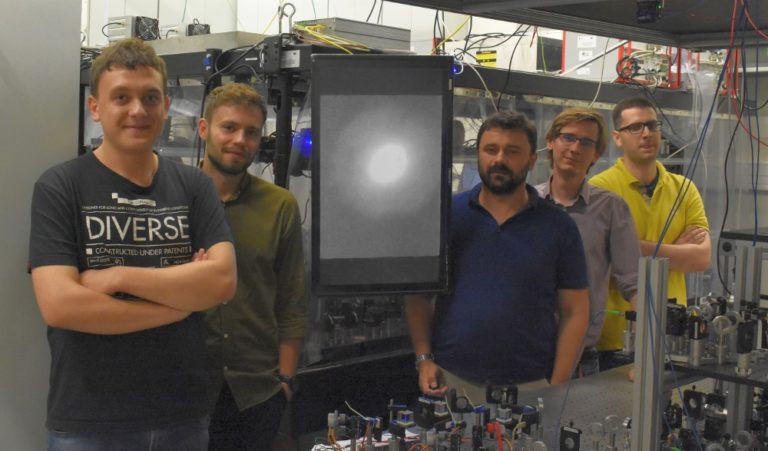
"Polish physicists and neuroscientists are joining forces to develop a miniature, biocompatible imaging system based on optical-fibre microlenses, which can be inserted into the deeper structures of the brain, such as the amygdala, of experimental animals. This will allow the real-time monitoring...

The ENSEMBLE3 project has been launched

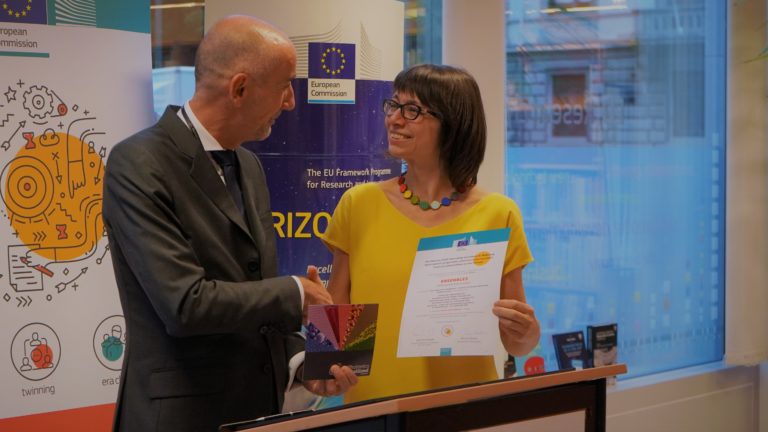
"The European Research and Innovation Days, held in late September in Brussels, featured the symbolic inauguration of the ENSEMBLE3 project. The project's coordinator is Dorota A. Pawlak, a winner of a number of FNP competitions. The goal of the ENSEMBLE3 project is to create a Centre of...

How smog affects children?s brains

"Polish scientists in the NeuroSmog consortium plan to study hundreds of children to determine how smog impacts their developing brains. They have received over PLN 15 million for this research from the Foundation for Polish Science under the TEAM-NET programme. The work will be conducted by...

START 2020 recruitment launched

"From today, 17 September 2019, through the end of October, young researchers can file applications for stipends in the START programme (2020 competition). The START stipend is a distinction for the most talented young researchers awarded in recognition of their scientific accomplishments....

In search of new sources of terahertz radiation

"Terahertz radiation, invisible to the human eye, can be placed in the electromagnetic spectrum between infrared radiation and microwaves. It is often called the ?the forgotten band?, or ?the Terahertz gap.? This is because we still have not found the way to use it in practice, although in...

Call for FNP experts ? the 18th round

"The Foundation for Polish Science (FNP) is announcing a call for expert candidates as part of the Smart Growth Operational Programme 2014-2020 under Measure 4.4 ?Increasing the human potential in the R&D sector? as part of which it fulfils the role of the Implementing...

Phantoms to aid radiation therapy

"How to make radiation therapy more accurate and effective in cancer treatment? Researchers and doctors have joined forces to create a medical phantom for precise dose planning in radiation therapy. The device will enable adjusting both the dose and the angle of the radiation beam to the needs of...

Poland, here I come!

"They?re foreigners and they come to Poland especially to work in science. Or they are Poles who have lived abroad for a long time but choose to return home for the next stage in their scientific career. What are their reasons? What are they involved in? How is it to work here? What do you like...

A project by a Foundation for Polish Science?s laureate awarded a prestigious EIC grant and distinguished in a competition organised by the American Association for Clinical Chemistry

"Co-founded by one of FNP?s laureates, prof. Piotr Garstecki, the company received a grant of EUR 1.9 million for further research on the innovative BacterOMIC system designed to support faster and cheaper diagnostics of bacterial infections, which is particularly important in difficult infections...

Polish?French Scientific Award: Now accepting nominations

"The Foundation for Polish Science (FNP) and the French Ministry of Higher Education, Research and Innovation (MESRI), in cooperation with the French Academy of Sciences, invite the submission of nominations for the first competition for the Maria Skłodowska and Pierre Curie Polish?French...

Dr Filip Taterka: The puzzles of an Egyptologist

"It might seem that a researcher of the temple of Hatshepsut and translator of tales written in a mysterious script would have to be a pretty busy person. But the mystery of the space-time inhabited by Filip Taterka, a 2019 laureate of the START programme of the Foundation for Polish Science,...

Success of FNP laureates in prestigious QuantERA competition

"We are pleased to report that in the prestigious competition for research on quantum technology organized by the QuantERA consortium, of the 12 winning international projects, five of them involve researchers from Poland, including four of our own laureates. The winning projects will be...

The Milky Way in three dimensions

"A team of Polish astronomers from the Astronomical Observatory of the University of Warsaw working in the OGLE project have created a unique three-dimensional map of the Milky Way. The map presents a precise picture of our galaxy and provides lots of new information on the structure and history...

Discoveries made by FNP programme winners, featured in Nature Communications

"FNP programme winners, in cooperation with Dutch and Australian researchers, have discovered a new model of droplet formation in microfluidic channels. The article is the result of work under the FIRST TEAM grant programme of the Foundation for Polish Science, led by Dr hab. Piotr Korczyk of...

Wybierz interesujący cię temat