Winners of the FOR UKRAINE Programme
Prof. Maciej Serowaniec
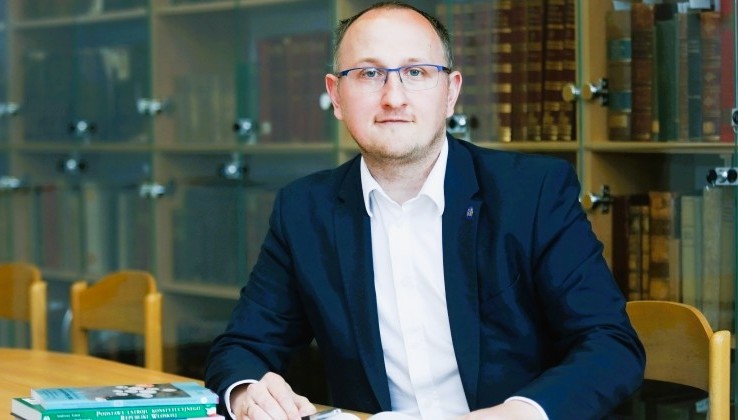
Professor at the Department of Constitutional Law, Faculty of Law and Administration, Nicolaus Copernicus University in Toruń. He currently serves as Dean of the Faculty of Law and Administration at Nicolaus Copernicus University and as Head of the Department of Constitutional Law.
He specializes in Polish and comparative constitutional law. Visiting Professor at LUISS “Guido Carli” in Rome, Kobe University, and Masaryk University in Brno. Principal investigator of the NCN grant “Niezależne instytucje fiskalne – niezidentyfikowane organy konstytucyjne?” (Independent Fiscal Institutions – Unidentified Constitutional Bodies?).
Participant in international research grants funded by the European Commission (“Responding to Emerging Dissensus: Supranational Instruments & Norms of European Liberal Democracy” – Horizon Europe; “Better Knowledge for Better Solutions” – Hercule III). Leader of the IDUB research group – Centre for Democracy, Accountability and Representation. Recipient of the European Court of Auditors Postgraduate Research Grant Programme.
Editor-in-chief of the annual Studi polacco-italiani di Toruń / Toruńskie Studia polsko-włoskie. Awarded the Polish Minister of Science and Higher Education scholarship for outstanding young scientists (2018–2020). Member of the Toruń Scientific Society and the ICON Society.
PhD Volodymyr Venher
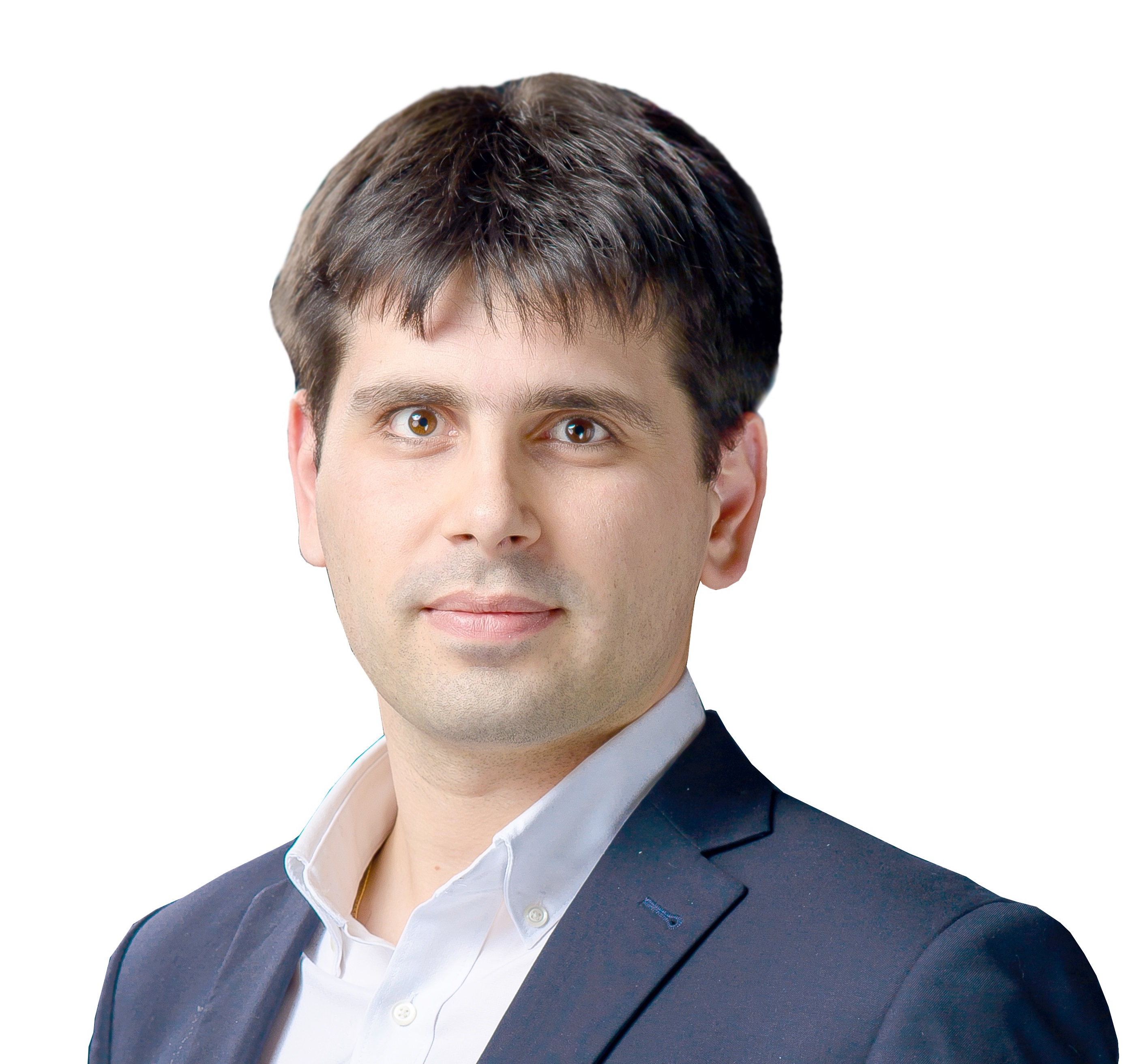
Dean of the Faculty of Law at the National University “Kyiv-Mohyla Academy” (NaUKMA) and Assistant Professor at the Department of Law and Public Law. He conducts comprehensive research on the theoretical foundations and practical implementation of the rule of law and human rights standards in Ukraine. He also serves as Executive Director of the Rule of Law Research Centre at NaUKMA.
Dr Venher has been regularly invited as a visiting professor to the School of Ukrainian Law at the Faculty of Law and Administration, Jagiellonian University, Kraków (2014–2025). He lectured at Paris 2 Panthéon-Assas University (2018) and was a Visiting Fellow at Brasenose College and the Institute of European and Comparative Law, University of Oxford (2022–2023). Previously, he held key public service positions, including Head of the Secretariat of the Legal Policy and Justice Committee of the Verkhovna Rada of Ukraine (2014–2017) and
Deputy Head of the Secretariat of the Constitutional Court of Ukraine (2017–2018).
In recent years, he has participated in numerous research projects as a constitutional law expert, including the Folke Bernadotte Academy project “Local Self-Government and Rule of Law in Ukraine” (2015–2023). His latest initiatives focus on parliamentary reform and the implementation of rule-of-law principles. He has also collaborated with the European Commission for Democracy through Law (Venice Commission) on the “Rule of Law – Central Asia” project (2018–2021).
The project's title is: “Reforming Parliamentary Service for Better Governance and European Integration: A Comparative Study of Ukraine and Poland”.
The project addresses one of the key challenges facing contemporary parliaments, namely the modernization of their administrative and expert support structures to ensure effective functioning within the framework of European integration. The study focuses on Poland and Ukraine, which, despite different historical experiences, today face similar challenges.
The research focuses on the role of professional, politically neutral structures that support the legislative process – teams of experts and officials responsible for drafting bills, analyzing the effects of their implementation, and ensuring that new regulations comply with European Union law. Moreover, an important area of analysis is the cooperation between parliaments and universities, institutions, and international organizations, which allows access to the latest knowledge and expertise.
Two researchers conduct the project – a specialist in the Polish parliamentary system and an expert on Ukraine. Each conducts detailed research on parliamentary functioning in their respective country and then compares the results to create an in-depth analysis of both models.
The research has a dual purpose. On one hand, it supports the reform of parliamentary administration in Ukraine, which must undergo modernization in the context of European integration. On the other, it provides an opportunity to critically examine practices used in Poland and identify possibilities for their improvement.
The project emphasizes knowledge exchange, inter-institutional dialogue, and regional cooperation. This approach not only facilitates the development of best practices but also fosters lasting relationships between experts and institutions in both countries. The ultimate goal is to develop modern, transparent, and effective solutions that enhance the quality of the legislative process and deliver tangible benefits to citizens.