Winners of the FOR UKRAINE Programme
PhD Tina Polek

Anthropologist, PhD in History, Lecturer at the Kyiv School of Economics, co-founder of the NGO Center for Applied Anthropology, and member of the European Association of Social Anthropologists (EASA).
She has extensive experience in both academic and applied anthropology. Her research focuses on urban anthropology and the anthropology of war, examining, among other topics, how urban environments and wartime conditions shape social relations, resilience, adaptive strategies, and transformations of public spaces.
In applied anthropology, she has conducted research for the business sector (including corporate culture, organizational transformations, and audience analysis), as well as for NGOs and civic organizations, studying the needs, challenges, and support systems for Ukrainian soldiers and veterans.
Currently, she conducts and co-leads ethnographic projects in wartime contexts, with particular attention to uncertainty as a structural element of social life in Ukraine. Her analyses use fieldwork experience to explore how individuals and communities cope with instability, negotiate social norms, and maintain bonds under conditions of political volatility and rapid change.
In addition to her research activities, she actively promotes anthropology in Ukraine through online courses and public lectures.
PhD Tomasz Kosiek
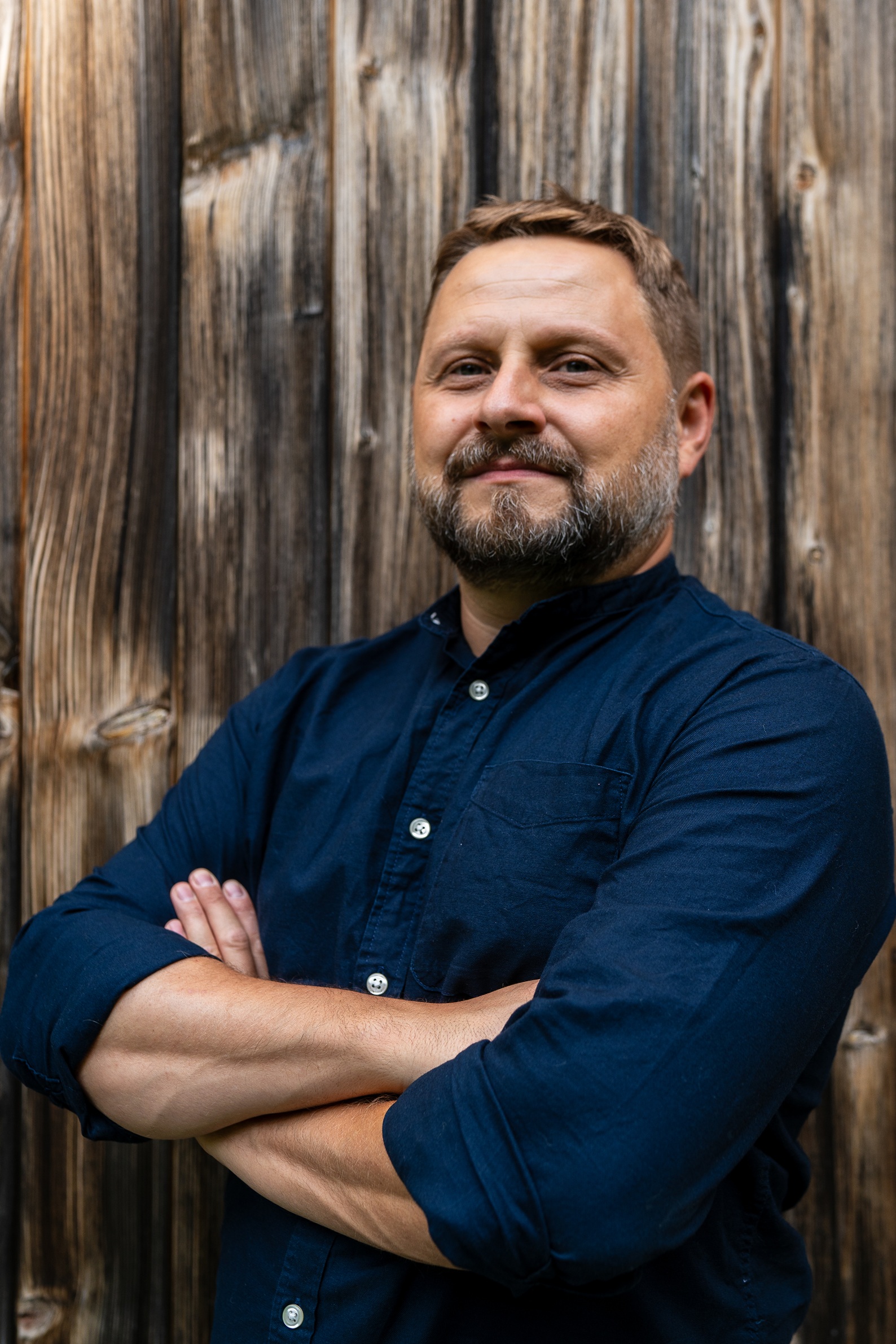
Social and cultural anthropologist, cultural Studies scholar, and coordinator of cultural and community projects. Assistant Professor at the Institute of History, University of Rzeszów, and Head of the Cultural Studies program. He has been a fellow of the International Visegrad Fund and the National Agency for Academic Exchange.
For many years, he has conducted ethnographic research in Poland and the Eastern Carpathians (Ukraine, Romania), focusing on ethnicity, collective memory, cultural heritage, and local economic strategies.
He is the author of numerous scientific articles and co-editor of two monographs. He is the initiator and co-leader of the project “Broadcasting from the Forgotten European Borderlands: Carpathian Watershed in the Polyphony of Voices,” which led to the creation of the portal www.wododzial.pl.
He is also the author of the ethnographic exhibition “Polifonia pamięci na granicach karpackich światów “ (Polyphony of Memory on the Borders of Carpathian Worlds), presented at the F. Kotula Ethnographic Museum in Rzeszów (2023) and the Folk Art Gallery of the Folk Artists Association in Lublin (2024–25).
The project's title is “Climate Change on the Polish-Ukrainian Border: Everyday Strategies and (In)Resilience in an Anthropological Perspective”.
The project examines how local communities on the Polish-Ukrainian border cope with the climate crisis. The researchers aim to understand how residents perceive climate change, what actions they take in response, and how they adapt their daily lives and local economies to new conditions.
The project employs a climate anthropology approach, treating climate change not only as an environmental issue but also as a social, cultural, and moral one. The researchers will conduct qualitative ethnographic studies, including observation of everyday life, interviews, and ethnographic walks. They will pay special attention to informal, grassroots initiatives, such as protecting water sources, planting trees, preventing construction on floodplains, and monitoring deforestation. These activities, referred to as “grassroots ecology,” reflect a concern for the common good and interdependence, independently of state or market interventions.
A comparative analysis of Polish and Ukrainian communities and environmental organizations will show how different political and economic conditions shape local actions. In Poland, EU environmental programs play an important role, while in Ukraine, initiatives are primarily driven by residents and local activists. The border does not constitute here a barrier but as a space of shared experiences and ecological challenges.
The research aims to provide a deeper understanding of local strategies for coping with the effects of climate change and to indicate how these strategies can support Ukraine’s ecological integration with the European Union.